Thursday, February 17, 2011
Hot Season Triangle
It was 35ÂșC in Phnom Penh today. After 3 months of blessedly cool, dry weather, the season is changing. Temperatures are beginning to rise. Standing on the roof for a smoke last night I noticed the ‘Hot-Season Triangle’ almost straight up - a landmark of the hot season nighttime sky. The Hot Season Triangle (also known as the 'Winter Triangle' and the 'Summer Triangle' in other parts of the world) is a group of three bright stars (Betelgeuse in the shoulder of Orion, Sirius and Procyon) forming a equilateral triangle. In February and March the Triangle can be seen high in the sky in the early evening, almost straight up about 2-3 hours after sunset here in Cambodia. It is particularly apparent when the moon is full as the moonlight washes out the dimmer stars, leaving the bright stars of the Triangle standing alone. When the Hot Season Triangle sits high in the sky in the early evening it bodes the coming of the heat and the imminent beginning of the ‘mango showers’ - light afternoon rains in the months before the monsoons, so known as they help ripen the mangoes, making the hot season the mango season as well.
Friday, February 4, 2011
Thursday, February 3, 2011
It's New Year again
![]() |
| Urn Jostling at Wat Phnom |
Many businesses were closed today and will be tomorrow as well - gates shut, bulbous Chinese lanterns hanging from the eves. In my walk around the city this afternoon, the streets were comparatively quiet - traffic very light as many stayed home with their families today. The smell of incense hung and still hangs in the air. Noisy troupes of Lion Dancers were making the rounds, visiting homes and businesses. Many houses in the city are decorated with New Year ornaments, almost all in red and gold - paper lanterns and coins, Fu Lu Shou, New Year children, stylized flowers and animals and other traditional Chinese images. Offerings of a red pig, food and fruit, incense, tobacco and drink sat on blankets and tables in front of houses. Some displays at the richer houses were quite elaborate. People burned ghost money at the streetside throughout the day, leaving little piles of ash and fake US$100 and Chinese bills blowing down some roads.
It's 1AM and I've just returned home from Wat Phnom here in Phnom Penh. My clothes reek of incense smoke and my eyes are burning and tearing from the same. Wat Phnom is the most popular pagoda in town for the local Chinese, Vietnamese and Khmer-Chinese to usher in the New Year. After 11PM hundreds of people crowd the pagoda grounds to await the new year. Like international New Year and unlike Khmer New Year, the Chinese New Year enters at midnight.
Dozens of vendors set up at the entrance and along the paths, selling joss sticks, flowers and ghost money. In previous years beggars lined the steps to the top of the hill. People would bring piles of small bills (100 Riel notes) just for the beggars. This year there were no beggars. None at all. I don't know why.
Revelers pay homage at the various shrines around the pagoda, offering incense, food and prayer to the spirit houses at the outer corners of the vihear, at the Ya Penh shrine and of course to Buddha inside the vihear. But the real action is on the north side of the hill at the 'Chinese shrine' - uncomfortably crowded and the air thick with the smoke of a thousand joss sticks, sometimes suffocatingly so. The mood is energetic as people vie for space and move from shrine to shrine. Crowds of men jockey and jostle for position around the preferred urns, jamming in giant joss sticks and holding on as if for dear life, sometimes for several minutes, so the stick can be retrieved and taken home still alight. Standing on the level above the urns for the best view, spectators (including myself) choked on the dense clouds of rising smoke, only able to watch for a couple of minutes at a time before having to flee for fresh air.
The midnight crowd at Wat Phnom was significantly lighter this year than previous years. Still several hundred people there, but probably half of last year's number. The pagoda area was not as well or festively lit as in the past, there seemed to be fewer vendors, and as I mentioned no beggars at all. I'm not sure if people have found someplace else to go or if perhaps they just aren't feeling as flush this year.
Still, it's all a pretty photogenic and exciting scene, and I've been going for years, but I almost never see foreigners there on New Year Eve. Tonight I think I was the only one. I find that a bit surprising.
A few photos and videos from around Phnom Penh yesterday and at Wat Phnom this last evening…
![]() |
| Lion dance trouper |
![]() |
| Feeding the lion |
![]() |
| Red pig for sale on the street today. |
![]() |
| Vihear and stupa at Wat Phnom |
![]() |
| 'Chinese Shrine' at Wat Phnom |
![]() |
| At the urn, Wat Phnom |
At the urn, Wat Phnom, almost midnight...
The 'Chinese shrine' at Wat Phnom, just after midnight...
(Videos were taken with my iPhone.)
Monday, January 24, 2011
The Hijab in Southern Cambodia
In my subjective and casual observation of some Cham Muslim communities in southern Cambodia, over the past decade the number of Cham women and girls donning the veil has risen from well less than half to a nearly universal practice.
The Cham are an ethnic minority group in Cambodia, distinct from the Khmers. They represent the remnants of the Kingdom of Champa, formerly located in what is now central Vietnam. Champa's history stretches into prehistory, but the kingdom was worn down over centuries of war and finally extinguished by the Vietnamese in the early 19th century. Originally Hindu like the Khmers, most of Champa converted to Islam in the 16th-18th centuries. Survivors of the fall of Champa fled Vietnam, scattering into Cambodia where they were granted refuge and settled in pockets, often along waterways. Several Cham Muslims communities dot southern Kampot province, clustered into certain areas, many hugging the rivers of the coastal area. The main road from Sihanoukville to Kampot (NR3) and on to Kep (R31) passes through many Cham communities, sometimes marked by the presence of a mosque or Arabic writing alongside the Khmer on school signs.
The different ethnic communities can also be distinguished by the dress of the people. Cham men often, perhaps even usually wear a sarong and taqiyah. The women wear sarongs as well. But their use of the hijab has changed significantly over the last decade. To my memory,10 or 15 years ago it was largely for the matronly and older women, similar to the practice of Khmer women wrapping their hair in a krama (a traditional checked Khmer scarf.) A couple of the most distinguishable differences between the two different ethnic groups was the somewhat different way the women draped their headwear and the pattern of the fabric - Khmers universally wearing the traditional checked pattern krama whereas the Cham women often use non-checked patterns and solid colors. Back then some younger Cham women also wore the veil but not as a rule, and it was rarely seen on children.
These days, in 2011, the hijab seems almost universal as I drive through and by Muslim communities along Route #3 in southern Cambodia. It is worn by women, girls and very often children, usually in distinctive traditional hijab styles. And, for the first time, in the last year or so I have seen a couple of women in full cover dress in Kampot province. The surface differences between the Khmer and Cham communities is no longer a subtle one.
A few related links:
Cambodian Muslim women dropping out of state schools - 2007
Cambodian prime minister tells schools to allow Muslim headscarves - Sept 11, 2008
Islam in Cambodia
An American Mosque in Cambodia
Phnom Penh Post: Concern over radicalization - July 14, 2011
The Cham are an ethnic minority group in Cambodia, distinct from the Khmers. They represent the remnants of the Kingdom of Champa, formerly located in what is now central Vietnam. Champa's history stretches into prehistory, but the kingdom was worn down over centuries of war and finally extinguished by the Vietnamese in the early 19th century. Originally Hindu like the Khmers, most of Champa converted to Islam in the 16th-18th centuries. Survivors of the fall of Champa fled Vietnam, scattering into Cambodia where they were granted refuge and settled in pockets, often along waterways. Several Cham Muslims communities dot southern Kampot province, clustered into certain areas, many hugging the rivers of the coastal area. The main road from Sihanoukville to Kampot (NR3) and on to Kep (R31) passes through many Cham communities, sometimes marked by the presence of a mosque or Arabic writing alongside the Khmer on school signs.
The different ethnic communities can also be distinguished by the dress of the people. Cham men often, perhaps even usually wear a sarong and taqiyah. The women wear sarongs as well. But their use of the hijab has changed significantly over the last decade. To my memory,10 or 15 years ago it was largely for the matronly and older women, similar to the practice of Khmer women wrapping their hair in a krama (a traditional checked Khmer scarf.) A couple of the most distinguishable differences between the two different ethnic groups was the somewhat different way the women draped their headwear and the pattern of the fabric - Khmers universally wearing the traditional checked pattern krama whereas the Cham women often use non-checked patterns and solid colors. Back then some younger Cham women also wore the veil but not as a rule, and it was rarely seen on children.
These days, in 2011, the hijab seems almost universal as I drive through and by Muslim communities along Route #3 in southern Cambodia. It is worn by women, girls and very often children, usually in distinctive traditional hijab styles. And, for the first time, in the last year or so I have seen a couple of women in full cover dress in Kampot province. The surface differences between the Khmer and Cham communities is no longer a subtle one.
A few related links:
Cambodian Muslim women dropping out of state schools - 2007
Cambodian prime minister tells schools to allow Muslim headscarves - Sept 11, 2008
Islam in Cambodia
An American Mosque in Cambodia
Phnom Penh Post: Concern over radicalization - July 14, 2011
Sunday, January 23, 2011
Friday, January 21, 2011
The curious case of the banning that wasn’t
Two days ago rumors flew that the Cambodian government had blocked all blogspot websites, presumably to prevent access to the controversial blog KI Media and possibly Khmerization as well. Blogspot sites were unavailable through some ISP providers in Cambodia for most of the day.
That night and again yesterday, the Cambodian government denied that it had ordered any such ban. And by the following day blogspot was once again accessible through most ISP providers in Cambodia.
So how did the rumors of the blogspot ban begin?
On the morning of the 19th internet users in Cambodia noted on social media and discussion forums that blogspot seemed to be either partially or wholly unavailable in-country. Some were quick to suggest that an official ban had been imposed. Such a move by the government was not wholly unexpected as they had threatened to regulate internet access before and had very recently expressed strong concerns over the blogspot site KI Media.
By midday tell had it that an ISP provider was informing its customers that it had blocked blogspot on the request of the Cambodian Ministry of Interior. So around 2PM I phoned the provider, spoke to a customer representative and asked straight out, “Have you blocked blogspot?” to which she responded with a quick and unequivocal “Yes…the Ministry of Interior has requested all ISP providers in Cambodia to block all of blogspot.” I called them again a few hours later at the end of the workday, asked the same question and received the same answer, virtually verbatim, sounding very much like a prepared statement. I probed a bit, asking if they might narrow or lift the ban in the future and was told it depended on instructions from the Ministry.
The following day the Phnom Penh Post reported that upper management of the ISP provider was denying having received any instructions from the government and that the outage had been caused by a “technical glitch.” This is curious.
This would seem to imply that the information the customer service reps had been giving all day was the result of some sort of communication breakdown. But if a misunderstanding, how did the reps come to deliver such a specific confirmation of a government ban, right down to naming the ministry and other details of the ban? If it was some sort of miscommunication within the company, it is difficult to imagine the mechanics of it.
Did the company techs tell their customer rep staff there was “a technical glitch causing inaccessibility of some sites” that they somehow misheard as “the Ministry of Interior has requested that all ISP providers in Cambodia block all of blogspot”? That would be quite the misunderstanding. Did some manager simply assume the outage was a result of a government ban as well as all the other attending details and pass that on to the customer reps? That would be quite the assumption.
It would seem that there is more to the story than a mere technical glitch. Perhaps... Testing the waters? Somebody jump the gun or overstep their authority? Idle talk mistaken for a wink and a nod? A subtle move screwed up by loose lips and/or heavy handed techs? An honest misunderstanding of enormous coincidental proportions? In lieu of additional information, what that ‘more’ might be is a matter of speculation.
If nothing else, the episode provided a glimpse of what would happen if such a ban were implemented. Almost immediately there was an outcry from observers both in and outside Cambodia, within hours information on how to bypass the block via proxy servers was circulated, KI Media began to set up mirror sites outside of blogspot and it all turned into a huge publicity boom for the site, acting to promote KI Media rather than suppress it.
All this said, as of today there is no official ban on blogspot (though a couple of providers still seem to be suffering some sort of 'technical glitch') and, to its great credit, Cambodia still has the freest and most open internet access in mainland Southeast Asia.
That night and again yesterday, the Cambodian government denied that it had ordered any such ban. And by the following day blogspot was once again accessible through most ISP providers in Cambodia.
So how did the rumors of the blogspot ban begin?
On the morning of the 19th internet users in Cambodia noted on social media and discussion forums that blogspot seemed to be either partially or wholly unavailable in-country. Some were quick to suggest that an official ban had been imposed. Such a move by the government was not wholly unexpected as they had threatened to regulate internet access before and had very recently expressed strong concerns over the blogspot site KI Media.
By midday tell had it that an ISP provider was informing its customers that it had blocked blogspot on the request of the Cambodian Ministry of Interior. So around 2PM I phoned the provider, spoke to a customer representative and asked straight out, “Have you blocked blogspot?” to which she responded with a quick and unequivocal “Yes…the Ministry of Interior has requested all ISP providers in Cambodia to block all of blogspot.” I called them again a few hours later at the end of the workday, asked the same question and received the same answer, virtually verbatim, sounding very much like a prepared statement. I probed a bit, asking if they might narrow or lift the ban in the future and was told it depended on instructions from the Ministry.
The following day the Phnom Penh Post reported that upper management of the ISP provider was denying having received any instructions from the government and that the outage had been caused by a “technical glitch.” This is curious.
This would seem to imply that the information the customer service reps had been giving all day was the result of some sort of communication breakdown. But if a misunderstanding, how did the reps come to deliver such a specific confirmation of a government ban, right down to naming the ministry and other details of the ban? If it was some sort of miscommunication within the company, it is difficult to imagine the mechanics of it.
Did the company techs tell their customer rep staff there was “a technical glitch causing inaccessibility of some sites” that they somehow misheard as “the Ministry of Interior has requested that all ISP providers in Cambodia block all of blogspot”? That would be quite the misunderstanding. Did some manager simply assume the outage was a result of a government ban as well as all the other attending details and pass that on to the customer reps? That would be quite the assumption.
It would seem that there is more to the story than a mere technical glitch. Perhaps... Testing the waters? Somebody jump the gun or overstep their authority? Idle talk mistaken for a wink and a nod? A subtle move screwed up by loose lips and/or heavy handed techs? An honest misunderstanding of enormous coincidental proportions? In lieu of additional information, what that ‘more’ might be is a matter of speculation.
If nothing else, the episode provided a glimpse of what would happen if such a ban were implemented. Almost immediately there was an outcry from observers both in and outside Cambodia, within hours information on how to bypass the block via proxy servers was circulated, KI Media began to set up mirror sites outside of blogspot and it all turned into a huge publicity boom for the site, acting to promote KI Media rather than suppress it.
All this said, as of today there is no official ban on blogspot (though a couple of providers still seem to be suffering some sort of 'technical glitch') and, to its great credit, Cambodia still has the freest and most open internet access in mainland Southeast Asia.
Wednesday, January 19, 2011
Cambodia blocks blogspot
If you are reading this you are probably not in Cambodia.
In a huge step backwards, it appears that the Cambodian government has requested internet providers in Cambodia to block all Google blogspot/blogger sites. This has presumably been done in order to ban one website in particular from Cambodian eyes: KI Media.
KI Media is a largely political, opposition-leaning blog that republishes current news stories regarding Cambodia (that it lifts from other sources) and also publishes various opinion pieces on Cambodia. The Cambodian government has complained of KI Media for years, particularly of late, for what it considers to be KI Media's inflammatory, provocative and insulting language and criticisms of the government and government figures.
Personally, I don't like KI Media. It is, as the government claims, inflammatory, provocative and insulting. I would also add: highly biased, vulgar, often racist and having no regard for copyrights and the intellectual property of others. That said, they are, for better or worse, a member of the online media, and a country which respects freedom of the press would not attempt to censor this political voice. Sadly, it seems that the Cambodian government has done just that.
Cambodia is well advanced of its neighbors with regard to press freedom. All manner of websites are blocked in Vietnam, Thailand and Burma. And their print media is no freer. Cambodia stood apart in Southeast Asia, with completely open and free access to internet and a comparatively good record in regard to the print media as well, especially the English language press. (This is not to say that Cambodia has been a model in this regard. There have been some problems including the occasional intimidation of members of the Cambodian press, threats of blocking internet, a controversial film banned from showing, and a recent assault on a Phnom Penh Post photographer covering the Boeung Kak Lake eviction story.) But actually blocking blogs, particularly a political a blog, is a new and very large step backwards for the freedom of speech and press in Cambodia. If it has actually occurred and remains in force, it is likely the beginning of a long a slippery slope of internet censorship in Cambodia.
At this point the internet block has only been partially confirmed and there are varying reports of its extent. Cambodia has several internet providers and some seem to have blocked more than others. For example, as of early this morning Telesurf did not appear to be blocking any websites. Some Online users report that they are unable to access KI Media though other blogspot sites are available. But Ezecom users report that all blogspot websites are inaccessible. I called Online and Ezecom here in Phnom Penh and asked about the rumors of blocked websites. Online said that it had not blocked any websites. But Ezecom informed me that as of today, "the Ministry of Interior has requested all ISP providers in Cambodia to block all of blogspot, (which we have done.)"
UPDATE: 10:10PM, 19/1/11 - The Phnom Penh Post has just reported that government officials are denying that there has been any official order to block blogspot. The Ministry of Post and Telecommunication (MPTC) has denied it categorically. The Ministry of Interior seems less sure. Ezecom, the ISP provider that told me that they received notice from the Ministry of Interior to block blogspot, is now hemming and hawing.
Khmer440 discussion: Blogger barred by RCG
EAS Report
In a huge step backwards, it appears that the Cambodian government has requested internet providers in Cambodia to block all Google blogspot/blogger sites. This has presumably been done in order to ban one website in particular from Cambodian eyes: KI Media.
KI Media is a largely political, opposition-leaning blog that republishes current news stories regarding Cambodia (that it lifts from other sources) and also publishes various opinion pieces on Cambodia. The Cambodian government has complained of KI Media for years, particularly of late, for what it considers to be KI Media's inflammatory, provocative and insulting language and criticisms of the government and government figures.
Personally, I don't like KI Media. It is, as the government claims, inflammatory, provocative and insulting. I would also add: highly biased, vulgar, often racist and having no regard for copyrights and the intellectual property of others. That said, they are, for better or worse, a member of the online media, and a country which respects freedom of the press would not attempt to censor this political voice. Sadly, it seems that the Cambodian government has done just that.
Cambodia is well advanced of its neighbors with regard to press freedom. All manner of websites are blocked in Vietnam, Thailand and Burma. And their print media is no freer. Cambodia stood apart in Southeast Asia, with completely open and free access to internet and a comparatively good record in regard to the print media as well, especially the English language press. (This is not to say that Cambodia has been a model in this regard. There have been some problems including the occasional intimidation of members of the Cambodian press, threats of blocking internet, a controversial film banned from showing, and a recent assault on a Phnom Penh Post photographer covering the Boeung Kak Lake eviction story.) But actually blocking blogs, particularly a political a blog, is a new and very large step backwards for the freedom of speech and press in Cambodia. If it has actually occurred and remains in force, it is likely the beginning of a long a slippery slope of internet censorship in Cambodia.
At this point the internet block has only been partially confirmed and there are varying reports of its extent. Cambodia has several internet providers and some seem to have blocked more than others. For example, as of early this morning Telesurf did not appear to be blocking any websites. Some Online users report that they are unable to access KI Media though other blogspot sites are available. But Ezecom users report that all blogspot websites are inaccessible. I called Online and Ezecom here in Phnom Penh and asked about the rumors of blocked websites. Online said that it had not blocked any websites. But Ezecom informed me that as of today, "the Ministry of Interior has requested all ISP providers in Cambodia to block all of blogspot, (which we have done.)"
UPDATE: 10:10PM, 19/1/11 - The Phnom Penh Post has just reported that government officials are denying that there has been any official order to block blogspot. The Ministry of Post and Telecommunication (MPTC) has denied it categorically. The Ministry of Interior seems less sure. Ezecom, the ISP provider that told me that they received notice from the Ministry of Interior to block blogspot, is now hemming and hawing.
Khmer440 discussion: Blogger barred by RCG
EAS Report
Monday, January 17, 2011
Sunday, January 16, 2011
Update: National Route #3 to Kampot
Three months ago I reported on the state of the roads south from Phnom Penh to Kampot and Kep, recommending at the time taking an alternative route via Nation Route #2 (NR2) in lieu of the on-going road construction on the more direct National Route #3 (NR3.) Over the last few months the conditions on NR3 have improved greatly. Most of the construction on NR3 is now complete and the road is wide, flat and paved. A sure sign that NR3 is now the better route, most Kampot-bound taxis and buses have begun to use NR3 again instead of NR2. There are still comparatively short unfinished sections (a few kilometers) at both ends, near Phnom Penh and near Kampot, and several bridges are also still incomplete, requiring short detours. But the trip down NR3 to Kampot can now be made in about 3 hours, perhaps a bit longer, the same or faster than the alternative routes. As road construction seems to be moving along at a brisk pace and is in its final stages, my guess is that NR3 will 100% complete in the fairly near future.
Most direct route from Phnom Penh to Kampot: NR3 all the way.
Most direct rout from Phnom Penh to Kep: NR3 > R31 > R33 > R33a
See the map in my previous post.
Most direct route from Phnom Penh to Kampot: NR3 all the way.
Most direct rout from Phnom Penh to Kep: NR3 > R31 > R33 > R33a
See the map in my previous post.
Saturday, January 15, 2011
The state of Otres Beach
![]() |
| The near end of Otres Beach, last week |
The beach itself is wonderfully primitive and laid back. There are no hotels, spas or shops, not even any running water or, until just last year, regular electricity. Until mid-2010, thatch covered beach bars dotted the full length of Otres, but much more sparsely than Ochheuteal. There were a few basic bungalows on the sand and a couple of places offering kayaks and Hobies. Even the roaming beach vendors (massage and trinkets) were much fewer and far less aggressive than their Ochheuteal counterparts. Otres was (and still is) a place that you can fall asleep in your beach chair unperturbed by crowds, beggar kids and hawkers. The only real drawback to Otres was that it is difficult (and even dangerous) to get back to the main town area come evening. The road is long, lonely and dark, and robberies of those trying to make their way back in the evening are not unknown. Better to come back either before sundown or stay the night at Otres.
![]() |
| Map of Otres showing the project area |
Early last year, it seemed the end was nigh. The on and off talk of development began to concretize. The government delivered notice that all businesses were to clear the beach in a month to make way for a planned development. After negotiations, the government seemed to relent, demanding only that people stop laying permanent foundations on the beach. And offering even greater hope at the time, the city connected the Otres area to the regular electrical grid and allowed the beach businesses to hook in, bringing Otres its first 24/7 power.
![]() |
| The development project |
![]() |
| Inside the development area, last week |
At the near end, the atmosphere has changed very little from the old Otres. If you don't walk up the beach too far you won't even know the development project is there. Relaxed little beach bars and BBQ shacks still ply their trade. Many of the beach bungalows are now gone, but not all, and little guesthouses have begun to pop up on the other side of the road, off the sand but still only 20 meters from the
![]() |
| Evicted villager's huts |
How long will it last? God and the government only know. There are still rumors of an expanded development project that will take out the remaining businesses at the near end, but no sign or official word of it yet. There is still the very grim reminder of Otres development on the entry road - the sad remnants of the Otres community, local people violently evicted from their village by a land deal back in 2007, now living in a string of squatter huts along the roadside. But for beach goers, for now, Otres is not gone. In fact, save the middle section, it is much the same as before.
![]() |
| Otres Beach, 2006 |
Eviction of Otres village
DAS: Otres evictions, update, February 12, 2008
PPP: Band bids Otres beach bars farewell, February 12, 2010
PPP: Otres eviction talks set for today, July 5, 2010
July 2010, Otres Beach 2010: What does the future hold???
Monday, January 10, 2011
Road Widening
![]() |
| Bulldozer works on Serendipity Beach Road |
I happened to be in Sihanoukville at the time and heard of some sort of trouble up on Serendipity, so headed over to check it out. I arrived a couple of hours after the bulldozer, its destructive work already well begun. The machine was moving up the edge of the road, crushing signage and curbside decks. A dozen and a half sour looking policeman lingered in the shade of a tree in front of Utopia and business owners both foreign and Khmer milled about with crossed arms and furrowed brows.
![]() |
| 21 meter mark |
Much complaining, cajoling and reasoning with the authorities ensued. It all seemed first to fall on deaf ears but then, at the last day, in a seeming act of partial concession, the city reduced the clear area from 40 meters to only 21 meters, bringing the edge of the road back to the front of the main structures of the businesses. Though a couple small places near the road's edge and at the peak of the hill such as Corruption Bar were completely removed, in most cases including all of the larger places, the area lost was limited to the street side seating, garden, signage and walkway, many not even that. Business continues pretty much as usual.
None of the business owners I asked knew for sure if the reduction to 21 meters was permanent or whether there might be further widening in the future. Time will no doubt tell.
Back in the mid 90s when I first came to Sihanoukville, coconut palm trees lined the 2-lane main road (Ekareach Street) from the police station at the top of the hill, through the downtown and most of the way to the Golden Lions. The trees were a varied bunch, some picture perfect, some less so, but still, they gave the Sihanoukville character, arching over the roads, providing little islands of shade for vendors, a playground for the monkeys, and affording the town a 'sea of palms' look - ideal for a tourist beach town.
![]() |
| Ekareach St., from the top of the hill, opposite the VN Embassy, Sihanoukville 1998 |
![]() |
| Ekareach St., from the same place at the top of the hill, last week |
One weekend in 1999 I came down for a couple of days and the first night turned into a late one. I stumbled out of the Moonshine Bar 4:30ish and then up the street to my downtown hotel, The Kampong Som.
At about 6am the 'next morning,' (an hour and a half later,) I was woken by the fitful drone of a distant chainsaw. My head was pounding. I took a swig of water, consoled myself with the idea that whatever they were cutting wouldn't take long, put the pillow over my head and tried to sleep. What seemed about an hour later the chainsaw was still whining, now even louder and closer. I cursed the hotel for its thin walls and cheap windows. 'This is what I get for $10 a night,' I thought. My head still hurt. I drank some more water, stuffed toilet paper in my ears, sandwiched my head between pillows and tried to sleep. But there was no let up in the noise...well...in fact, it would stop intermittently for a minute or two, offering hope, but would flare again as sure as a bad tooth. About 10am I admitted defeat. Between the headache, the noise and my general annoyance, I was up and out. I decided to get something to eat to try to quell the hangover. As I stepped into the hall I ran into a Vietnamese taxi girl from the bar the night before, Mai, a friend. She had just finished her shift so to speak and was on her way to breakfast. We joined up and headed out for a street side noodle stand that sat a few doors away from the hotel.
Stepping out the front door I was assaulted by an uncharacteristically bright hot sun. As my eyes adjusted I was struck near dumb by the scene. The palm trees, and all the shade and shield they provided, were gone...all of them! Well, not gone, but no longer standing. Dozens and dozens lay on the ground along the main street. Sawdust filled the air. The whir of the chainsaw was still audible a couple of blocks away. Every single palm along the road had been felled, exposing a painfully intense sky and rows of monotonous blocky white buildings.
Aghast, I bounded toward the destruction sputtering "What the fuck?!? What the fuck is this??? What have they done???" The place had gone from a picturesque little beach town to a communist-era cinder block city in a matter of hours. Mai walked up behind me, put her hands on her hips and surveyed the street, slowly turning her head back and forth to take in the whole scene. She nodded approvingly. "Very good, very neat, very clean, very good control." Shocked again, I looked at her and blurted "What?!? But the beautiful trees...It took years for those trees to grow...And now look, it's just dust and concrete," to which she calmly responded, "This city, not jungle. This very clean, very good control. See all the buildings. Good order." I was speechless. "Yes, very good. Clean! But..." she continued while shading her eyes from the intense tropical sun, "very hot here. Sun very strong. Come back, go inside, eat breakfast." I looked down the street. The noodle stand was gone. I went back inside.
Later that day I heard that the tree removal was the first stage of a road widening development plan. It took a long time after the trees were removed before the new road actually went in. Years, in fact. At first I was skeptical that it would ever happen. But the two lanes were eventually repaired. A couple of years on, it was improved to four lanes, then a couple years after that, widened to six lanes.
Tuesday, January 4, 2011
Monday, January 3, 2011
2010
It’s the first New Year of the year. Two more to come.
And it’s harvest time in Cambodia.
The monsoons ended a month or so ago. It’s cool and mostly rainless, bringing an end to the primary growing season. Most of the rice has recently been cut and the paddies are dry and turning fallow brown.
Driving through rural Kampong Trach (Kampot province) yesterday I saw several groups threshing rice by hand - the ‘flailing method’ - beating the long stalks against rows of threshing boards and funneling the seed into baskets beneath. Piles of drying rice straw sat stacked in front of houses and bamboo and plastic mats lined the side of the road, covered with new rice seed airing in the sun and breeze. Toward the end of the day, as the sun was setting, women collected the dry seed from the mats into large sacks for storage.
Rural Cambodia is a busy place right now, bustling with harvest work. Not really an ideal time for a New Year holiday. Nevertheless, there will be many celebrations today (Dec 31,) and a certain amount of partying come Chinese New Year in February as well. Cambodians are never ones to pass up on a good holiday, even non-Cambodian ones. But the real New Year here - Khmer New Year (Jol Chhnam Khmei) - is still months away, in April, well after the harvest period has ended and just before the seasonal rains begin, at a time more in sync with the Southeast Asian rhythms of the monsoons and the rice.
Nevertheless, for a westerner like me, today is New Year Eve, my New Year Eve. So, naturally, with three hours to kill driving from Phnom Penh to Kep, I took to reflecting on the year for Cambodia - the news, the big stories, the not so big stories, changes, non-changes, lingering impressions and the state of things. I made a list of whatever came to mind, noting it into my iPhone as I drove. This is that list, with some references added.
* The Preah Vihear border dispute with Thailand was news all year in one form or another – a largely imposed crisis, its current incarnation born of Thailand’s recent internal upheaval. To date, Cambodia has held her own quite well throughout, the Cambodian PM deserving much of the credit for navigating difficult political waters, just bringing the Preah Vihear dispute to a seemingly settled calm... Through there has just been yet another incident spurring yet another crisis. It continues.
* China is HERE in the most present tense, inking huge deals in aid, investment and development, throwing money at Cambodia like it grows on trees in China. The US (and the west) lost significant ground in Cambodia as China soared in the zero-sum game of aid/investment-bought influence and favor. ‘No-strings’ money from China won hands down over American-style hard bargaining aid-for-improvements approach. Uncle Sam isn't the only deep-pockets sugar daddy on the block anymore.
* Boeung Kak Lake is almost gone.
* The Japanese drainage system project in Phnom Penh that tied up traffic and parks for two years was completed this year, seemingly with no visible effect whatsoever on the drainage. In my non-expert observation, it floods now same as before, maybe worse. I’m no engineer but I can’t help but wonder if the demise of Boeung Kak Lake might have something to do with it.
* A mid-term year, the next national elections still 2 years away, internal politics were a bit slow. The government is stable and functioning, probably more so than any government since UNTAC. The CPP is in firm and sole control, holding the majority necessary to control Parliament. SRP is still percolating along, being provocative, getting accused, threatened with jail and touring the world. FUNCINPEC and friends burped and gurgled a couple of times.
* Mu Sochua of SRP distinguished herself, winning a big-stakes game of chicken with the government, standing her ground when others may have gone to France. Who has the cajones in that party, eh? Keep an eye on this lady. She’s going places.
* Land grabbing and evictions continue unabated.
* A Khmer Rouge guy was convicted. 'Enough is enough' was declared. And send more money.
* Boeung Keng Kang 1 is now the city's preferred hunting ground of midnight muggers.
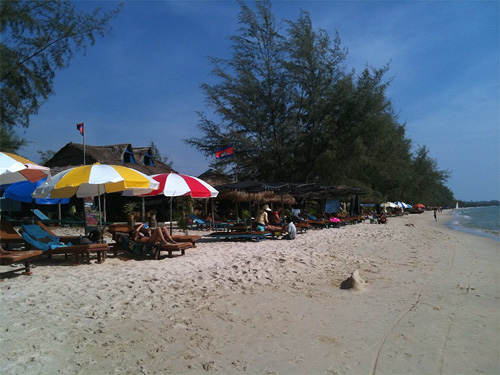
* Yet another beach in Sihanoukville - Otres Beach - has been partially closed for development. Now, something like two thirds of the main beaches on the peninsula are either closed or suffer limited access. (Don't fret, beach-goers. There's still plenty of beach in Sihanoukville for you - Ochheuteal, part of Victory, part of Otres and Sokha if you can afford it.)
* Most of the islands near Sihanoukville remain completely undeveloped - beautiful, pristine beaches and untouched tropical jungle. But it’s not going to last. Plans are afoot. Experience it while you can.
* An exclusive gym for the employees of 7NG Land Development Group has been erected on the site of the Dey Krahorm village eviction. All 7NG Group staff will be free to play different kinds of sports: football, tennis, volleyball, etc.
* Siem Reap managed to get even more touristy with Pub Street at ground zero.
* There are now several KFCs in Cambodia (Phnom Penh and Siem Reap) and Pizza Hut and Burger King are on the way.
* Koh Pich.
* Cambodia, long given one-dimensional coverage in the international press, got a little more comic book this year – a land of Villains, Victims and now Heroes.
* The rural countryside remains about the same - picturesque, poor, ignorant and traditional.
* The guy throwing bricks at foreigners on the riverfront seems to have stopped, and it turns out none of it ever happened anyway.
* Cambodia's first viral video, oh my.
* Pity tourism is still en vogue - 'volunteering,' orphanage visits, be-Angelina-for-a-day packages - providing potentially lucrative outlets for those who would exploit children and the disadvantaged. Study up before you do it.
* There seemed to be an abundance of sex industry focused Johnny-come-lately journalists, Christian saviors and new NGOs turning up this year – over-funded, under-informed and 10 years too late.
* On that same note, evangelical Christian groups seem to be arriving at an ever increasing rate, most involved in charitable work of some sort, all of them with an ulterior motive - hunting and collecting souls. However they have chosen to help - education, rescue, shelters, etc - it always come back to exposing people to the Word of the Lord Jesus.
* The real estate bubble that burst a couple of years ago remains burst. The Monument to Pointless Development at the corner of Monivong and Sihanouk has been completed.
* The tallest building in the Asia was constructed on the riverfront, but sank in the mud and disappeared. (Just kidding, sort of.)
* Kingdom Beer is making a go of it.
* Overland border crossings evolved a little. Poipet immigration seems to have cleaned up it's act. If you can fight your way through the army of visa and money exchange scammers on the Thai side and get to Cambodian immigration, you can get a Cambodian tourist visa for about the right price - $20. The crossing at Koh Kong remains the same, steeped in its overcharging ways. And Prek Chak on the VN border seems to have picked up some of the same habits.
* Police are actually enforcing the helmet laws for motorcyclists and occasionally a smattering of other traffic laws as well. Most people even obey the traffic signals these days, at least during the day. Times change.
* Tourist arrivals are up, though the demographics have changed some. Roads continue to improve. Seems to be lots of small infrastructure projects underway or imminent around the country. Investment, especially Chinese investment, is way up. GDP is up. The country is, in many ways, moving forward.
* The Cambodian riel lost a bit against the dollar but gained it back by years end - settling in around the old standard of 4000R to the dollar. Petrol isn't cheap (US$1-$1.20/liter) but cigarettes and beer still are. A buck for a pack of Marlboros, less for local cigarettes. Can even buy them one at a time. There's still no closing time at the bars...
Saturday, December 25, 2010
Participant-Observation
![]() | |||
| US Embassy, Phnom Penh, Christmas Eve |
In the week before the holidays we put up a small Christmas tree in our apartment, hung a couple of big red Christmas stockings on wall next to the tree and tacked some garland and fairy lights around the front door. Polly seemed fascinated by the whole process, as an anthropologist might, observing and studying some exotic foreign ritual.
Christmas morning we all exchanged gifts, one small gift to me being a pair of mitt-style potholders (I like to cook.) After opening gifts and the usual Christmas morning activities, my wife and I went out to a restaurant for breakfast. Upon returning home a hour later we found that the maid, in a sincere attempt to join in the Christmas doings, had hung the new potholders on the wall with the Christmas stockings. I guess, for somebody who had no real idea but was trying to follow the logic of the tradition, it probably made a good sense to hang the giant mittens on the wall next to the giant socks. Clueless but cute, and in the right spirit regardless. We left the potholders there until we took all the decorations down a week and a half later.
Merry Christmas.
Friday, December 24, 2010
Tuesday, December 21, 2010
A passing encounter
Bangkok. Out of the hospital with a clean bill and no required follow-ups. Not quite what I was but a helluva lot better than I could have been. I'm done with them and almost home.
Feeling tired and weak and a bit beaten up by the doctors, but nevertheless past it, I decided to make a night out, recoup some strength, if in attitude only. I began at a Soi 4 bar, perchance talking to an old (35ish) Thai taxi girl with whom I had one of the most disturbing conversations I've had.
I think she was trying to talk me up, hoping that I'd become a customer, but she spewed so much hatred, such unrelenting bile for everybody and every kind of person, that she literally made me feel physically ill. Any other time I would have been able to take it in stride, perhaps knock her down a few pegs, but my weakened state left me vulnerable.
One of the reasons I went to the bar was to try to relax and buck up a bit, put on a light, listen to some music, watch some people, get into a better frame. I just wasn't ready for her. Not that she directed any of her venom at me - after all, I was a potential customer. But no-one else was spared.
She began when I entered, harshly forcing some other (younger, prettier) taxi girls to relinquish their choice streetside seats to me, referring to them as "buffaloes." Granted, as a paying customer I was entitled to the seat, but I wouldn't have asked them to move, taxi girls or not.
I sat down.
She plopped down next to me and immediately began about the 'half-brained idiot farang bar owner' who lets these "useless buffaloes" do what they want. She went on…and on.
Trying to change the subject to something completely different, I asked about a katoey fortune teller that used to sit on the sidewak in front of the Dynasty Inn a few doors down. A deck of cards, a candle and a kerchief on the pavement - he was there for many years and I noticed in my last couple of visits that he had disappeared. I thought maybe he had moved. To be honest, I have no particular sympathy for katoeys and probably even something of a prejudice against them, but would never dream of wishing harm on somebody who had done me no harm. And this particular guy (girl) had always been kind to me. He spoke decent English and turned the cards and told my fortune a couple-few times over the years, doing a pretty good job of it. Anyway, when I asked about him she told me bluntly and with something of a smirk that he was dead - "dead of AIDS," she enunciated.
I felt an immediate rush of sadness. I knew this guy, or at least who he was. She went on to revel in it a bit, telling me how he deserved it because he was a katoey, how all katoeys deserve it, "butt-fuckers" that they are. I pressed for more info, received little, and in hindsight, I'm not sure she was telling the truth anyway. It may have all have been an exercise in wishful thinking.
She then went on to attack, in turn, the stupid Khmer beggars, the job-stealing Burmese, the thieving Vietnamese children who sell flowers on the street and, of course, the "smelly Muslims" that inhabit Soi 3. With a big smile she used my almost empty beer bottle to demonstrate how she would crack the skull of an 8-year-old Vietnamese 'match-girl' who was working the street nearby. And even though I went from a polite smile, to defending these people, to a blank stare, to a disgusted stare and finally quite obviously just looking away trying to ignore her, I don't think she ever got the idea that I was anything but enjoying her vile banter. I guess I should have just laid into her, but really wasn't up for a fight. That's not why I was there.
In the end, after only two beers, I called for my bill, paid the exact amount, and left. As I was leaving she followed, proffering the standard lilting "where are you going?" and a sweet voiced "come again," probably hoping for a tip or an offer to have her join me, but I wouldn't/couldn't even look at her.
I went on to better places and better people and made a pretty good night of it.
I have no moral to this story or conclusion to offer, just a vaguely sick feeling from the encounter, slowly fading as the hangover wanes and my strength returns.
Feeling tired and weak and a bit beaten up by the doctors, but nevertheless past it, I decided to make a night out, recoup some strength, if in attitude only. I began at a Soi 4 bar, perchance talking to an old (35ish) Thai taxi girl with whom I had one of the most disturbing conversations I've had.
I think she was trying to talk me up, hoping that I'd become a customer, but she spewed so much hatred, such unrelenting bile for everybody and every kind of person, that she literally made me feel physically ill. Any other time I would have been able to take it in stride, perhaps knock her down a few pegs, but my weakened state left me vulnerable.
One of the reasons I went to the bar was to try to relax and buck up a bit, put on a light, listen to some music, watch some people, get into a better frame. I just wasn't ready for her. Not that she directed any of her venom at me - after all, I was a potential customer. But no-one else was spared.
She began when I entered, harshly forcing some other (younger, prettier) taxi girls to relinquish their choice streetside seats to me, referring to them as "buffaloes." Granted, as a paying customer I was entitled to the seat, but I wouldn't have asked them to move, taxi girls or not.
I sat down.
She plopped down next to me and immediately began about the 'half-brained idiot farang bar owner' who lets these "useless buffaloes" do what they want. She went on…and on.
Trying to change the subject to something completely different, I asked about a katoey fortune teller that used to sit on the sidewak in front of the Dynasty Inn a few doors down. A deck of cards, a candle and a kerchief on the pavement - he was there for many years and I noticed in my last couple of visits that he had disappeared. I thought maybe he had moved. To be honest, I have no particular sympathy for katoeys and probably even something of a prejudice against them, but would never dream of wishing harm on somebody who had done me no harm. And this particular guy (girl) had always been kind to me. He spoke decent English and turned the cards and told my fortune a couple-few times over the years, doing a pretty good job of it. Anyway, when I asked about him she told me bluntly and with something of a smirk that he was dead - "dead of AIDS," she enunciated.
I felt an immediate rush of sadness. I knew this guy, or at least who he was. She went on to revel in it a bit, telling me how he deserved it because he was a katoey, how all katoeys deserve it, "butt-fuckers" that they are. I pressed for more info, received little, and in hindsight, I'm not sure she was telling the truth anyway. It may have all have been an exercise in wishful thinking.
She then went on to attack, in turn, the stupid Khmer beggars, the job-stealing Burmese, the thieving Vietnamese children who sell flowers on the street and, of course, the "smelly Muslims" that inhabit Soi 3. With a big smile she used my almost empty beer bottle to demonstrate how she would crack the skull of an 8-year-old Vietnamese 'match-girl' who was working the street nearby. And even though I went from a polite smile, to defending these people, to a blank stare, to a disgusted stare and finally quite obviously just looking away trying to ignore her, I don't think she ever got the idea that I was anything but enjoying her vile banter. I guess I should have just laid into her, but really wasn't up for a fight. That's not why I was there.
In the end, after only two beers, I called for my bill, paid the exact amount, and left. As I was leaving she followed, proffering the standard lilting "where are you going?" and a sweet voiced "come again," probably hoping for a tip or an offer to have her join me, but I wouldn't/couldn't even look at her.
I went on to better places and better people and made a pretty good night of it.
I have no moral to this story or conclusion to offer, just a vaguely sick feeling from the encounter, slowly fading as the hangover wanes and my strength returns.
Monday, December 20, 2010
Friday, December 17, 2010
Southeast Asia Backpacker's Credo and Motto
The Credo
1. I shall eschew the ways of the tourist and have an authentic Asian experience rather than a shallow, contrived, package holiday. I am Traveler.
2. I shall wear the largest possible backpack to bear proud witness of my creed.
3. I will spend my travels on the quest for Our Holy Grail - for the ‘Unspoiled Place’ - a place undiscovered by tourists, where happy, welcoming, generous natives tend vast fields of ganja along a deserted, previously unknown tropical beach, and that has Internet access.
4. I shall begin my quest on Khao San Road.
5. I shall not leave Khao San Road without a Lonely Planet guide.
6. I shall never admit to using a Lonely Planet guide.
7. I shall follow ‘Wheeler’s Way’, a mystical school of thought, which both eschews and embraces Khao San Road – a way of finding the Unspoiled Place without ever leaving the path.
3. I will spend my travels on the quest for Our Holy Grail - for the ‘Unspoiled Place’ - a place undiscovered by tourists, where happy, welcoming, generous natives tend vast fields of ganja along a deserted, previously unknown tropical beach, and that has Internet access.
4. I shall begin my quest on Khao San Road.
5. I shall not leave Khao San Road without a Lonely Planet guide.
6. I shall never admit to using a Lonely Planet guide.
7. I shall follow ‘Wheeler’s Way’, a mystical school of thought, which both eschews and embraces Khao San Road – a way of finding the Unspoiled Place without ever leaving the path.
(Editors note: ‘Wheeler’s Way’ is a school of thought posited as a possible answer to the decades old conundrum known as the ‘Sang Thip Paradox’: If it is in Lonely Planet then I can find it, but it won’t be the Unspoiled Place. If it is not in Lonely Planet, it might be the Unspoiled Place, but I won’t be able to find it.)
8. I shall wear the traditional international backpacker’s uniform and don at least one piece of local clothing (conical hat, krama, yam, etc.) to show my oneness with the Asian people.
9. I shall not clean the local soils and aromas from my uniform for I wish to always carry a piece of where I have been.
10. I shall never wear a souvenir tee shirt in the tee-shirt’s country of origin.
11. I shall eat banana pancakes on a regular basis, for it is the quintessential Asian food.
12. I shall eat in the cheapest restaurants. Hygiene is for package tourists.
13. I shall travel by the least comfortable means, for comfort is also for package tourists.
14. I shall drink the local beer, for I shall always endeavor to be in tune with the local culture. And because it is the cheapest.
15. I shall stay in the cheapest guesthouse. More money for beer.
16. I shall not allocate more that 75% of my daily budget to alcohol and drugs. Moderation in all things.
17. I shall make a pilgrimage to a Full Moon Party at Had Rin Beach Koh Phangan at least once in my life. For it is Mecca.
18. I shall revel in food and mosquito-borne diseases, for these are the badges of the true Asian Traveler.
19. I shall not leave Thailand without having my hair colored, dreaded, corn-rolled or shaved off.
20. I shall model my travels on “On the Road” by Jack Kerouac
21. I shall read “The Beach” before entering Thailand so that I understand the goal of quest.
22. I shall read “Off the Rails in Phnom Penh” before entering Cambodia so that I understand the dangers of the quest.
23. I shall read “The Quite American” while travelling through Vietnam because everybody else is.
24. And this above all: I shall bargain without mercy and hone my skills to a sharp edge, so that I can proudly proclaim our sacred motto:
“I get it for less than the locals”
In times of trial and doubt – as I lose all feeling in my legs in the 14th hour of a local bus ride…when I can’t sleep for the noise of a thousand rats scurrying through my $2 room…as vomit and diarrhea spew simultaneously from my salmonella saturated body – I will repeat this mantra unto myself…
I am not a tourist
I am not a tourist
I am not a tourist
I am not a tourist
I am not a tourist
I am not a tourist
I am not a tourist
I am not a tourist
I am not a tourist
I am not a tourist
I am not a tourist
…until the doubt passes and I am ready for more authentic Asian experiences.
(I originally published this several years back. A couple of the references are a bit dated, but otherwise it seems to be holding up pretty well. Yes, I know, backpackers are an easy mark and perhaps picked on a bit too much, but having visited Khao Sarn Road today, I just can't help myself. And it is, after all, the season to be jolly.)
Wednesday, December 15, 2010
The Friends
My favorite apsaras at Angkor Wat.
Of the thousands of devatas and apsaras adorning the walls of Angkor Wat, these two are, in my opinion, the least stilted, the most animate, the most 'real' there. The technical rendering is not particularly extraordinary for Angkor Wat, but I see more than the usual template poses in this pair. Natural posture, distinctively different faces and bodies, a seemingly authentic lopsided smile... even in the eyes, standing close, one leaning, head cocked, holding each other in an unusually intimate manner. I see in these two girls real people, and from the looks of it, friends, probably living and working in the temple together 900 years ago.
It would seem others have noticed their special quality as well. They are one of the most hand-worn bas-reliefs at Angkor Wat. Innumerable people over the ages have felt compelled to touch them as they passed, running their hand across the relief, polishing the stone to a slick shine.
Located on the first level interior, west wall, south half, they are not an especially easy pair to photograph, on a shaded wall stuck behind a pillar with less than a meter of clearance.
Would you say that these are apsaras or devatas?
Further reading:
The Many Faces of Angkor Wat
Angkor Wat Devata Inventory – Ver. 03-17-2010
Is Angkor Wat a 12th-century Facebook?
Book: Khmer Costumes & Ornaments: After the Devata of Angkor Wat (Amazon)
Monday, December 13, 2010
Still Angkor
![]() |
| North Kleang |
Saturday, December 11, 2010
Floor Tiles
Antique floor tiles of a French colonial-era building on Post Office Square in Phnom Penh, at the Golden Mermaid restaurant. Note the deep colors and fleur-de-lis not found in most modern tiles used in Cambodian buildings. Such tiles are often ripped up and discarded when an old building is refurbished, destroying a bit of history in the process. The proprietor of the Golden Mermaid was thoughtful enough to preserve the original tiles in place and even incorporate some of the broken tiles into the design of the bar counter.
Thursday, December 9, 2010
Medical Care in Cambodia
Recently I have had the unfortunate opportunity to survey some of the local medical facilities. Personal health issues have sent me to the hospital more than once in the past couple of months, most recently in need of emergency surgery. While this has impacted my ability to blog regularly, it has also given me opportunity to reflect on the medical facilities in Southeast Asia, in Cambodia and Thailand in particular.
I am not a medical professional, have no significant medical training and am in no way qualified to make a professional evaluation of the local medical facilities, doctors, nurses, medical staff or equipment. Nor have I made a comprehensive survey. The following is strictly the opinions of a layman and born of nothing more than my personal experiences with the medical facilities here in Cambodia and Southeast Asia. Please do not take it for any more than that.
First, a note on Cambodian doctors. As a general rule, I do not go to Cambodian doctors in Cambodia. I do not avoid them because they are Cambodian, but because most of them were schooled in Cambodia.
While the medical schools in Cambodia may be perfectly fine educational institutions, the endemic corruption in this country leads me to question how those who have graduated earned their degrees. For those people honorable enough to have studied and passed their exams based on medical knowledge, their resulting medical degree may represent that of a competent and well-trained physician. But because of the corruption in Cambodia including various educational institutions, I simply do not have confidence that the sheepskin on their clinic wall represents the successful effort of a medical student rather than his societal station and/or wealth. If I must go to a Cambodian doctor, I look for a medical degree earned outside the country - e.g. in France, the US, or for older doctors in the old USSR.
For my lack of faith in locally trained doctors, given the opportunity I will almost always choose to go to a western doctor or international clinic/hospital. Amongst the western doctors and clinics available here, I have come to trust Dr. Reid Sheftall at American Medical Center, Dr. Gavin Scott at Tropical & Travellers Medical Clinic and International SOS Medical & Dental Clinic. None charge local prices, especially the latter, which is amongst the most expensive in town. But I have found all to be properly qualified (to the best of my knowledge) and, in my personal experience, medically competent at the very least. I have found Dr. Sheftall to be particularly helpful in matters of trauma and injury, Dr. Scott to be excellent with medical problems common to Southeast Asia and SOS to be well-equipped and quite helpful in the medical care of my children.
There is a certain Australian nurse in Phnom Penh who, in the past, has offered (and perhaps still offers) medical services and is popular amongst some foreigners in town. I have nothing against seeing a nurse instead of a doctor for minor ailments. But, personally, I would avoid this nurse like the plague. While she may be qualified and competent as a nurse, in the past she has misrepresented and wildly overstated her medical qualifications. I say this not from hear-say but from personal and direct experience. She told me that she was a doctor, even stating the sort of medical degree she had and the institution where she earned it. None of it was true. She is a nurse of some sort. Misrepresenting one's medical qualifications is, in my book, a cardinal sin amongst medical professionals and taints everything that may follow. For this reason, I do not trust her and will not use her services.
One Cambodian clinic with which I have had more than one positive experience is Polyclinique Aurora. They are equipped with X-ray and ultrasound equipment, are open 24 hours, are much more reasonably priced than foreign run places and in my experience have attended competently to both major and minor injury cases. If money is an issue, I would be relatively comfortable going to Polyclinique Aurora.
Of the various hospitals in Cambodia, I have had the most experience with Royal Rattanak Hospital here in Phnom Penh and Royal Angkor International Hospital in Siem Reap. Both are connected with the very reputable Bangkok Hospital in Thailand and neither is particularly cheap. Both are new and modern, fairly well equipped and staffed largely with Thai doctors, some Thai nurses and local Cambodian staff. I have found both to be something of a surfacey imitation of their counterpart in Thailand, but not too detrimentally so. I spent time as an in-patient at Royal Rattanak in Phnom Penh and received attentive, appropriate if not somewhat spendy care. The private room was comfortable and not unlike a three-star hotel. I had one significant complaint while I was there about a failure of their procedures and it was dealt with promptly and appropriately. My only other negative observation is that they seem a bit too anxious to order up expensive MRIs, but who am I to second guess a doctor's orders?
Royal Angkor International Hospital in Siem Reap has received a number of negative reviews from expats, not due to a failure of medical care, but centered primarily around claims of inflated prices and a two-tier pricing system seemingly aimed at bilking foreigners. That said, my single personal experience at Royal Angkor was positive. My son, being the boy he is, took a nasty spill and split his lip open, requiring stitches to put him back together. We took him to emergency at Royal Angkor where they attended to him promptly, properly and with appropriate sensitivity to a scared little boy. He was there for a couple of hours, received three stitches, and we got out of the place for less than US$100. I was satisfied with the experience.
All this said about Cambodian medical facilities, if you have the time, money and opportunity, it is still better to seek medical care outside of Cambodia in one of her neighboring countries - i.e. Thailand or Vietnam. Cambodia's rich and powerful all travel outside the country for medical care and there is a reason for that. Medical care is simply better in Vietnam and Thailand than in Cambodia - better facilities, better treatment, better doctors.
Vietnam's medical facilities are surprisingly good and getting better all the time. And Vietnam is easier to reach than Thailand, at least overland. It is only an inexpensive 6 hour bus or taxi ride from Phnom Penh to Ho Chi Minh City. If you are medically able to make the journey, Ho Chi Minh is probably the least expensive, closest and easiest option outside of Cambodia.
Thailand's hospitals are undoubtedly the best in the region if not some of the best in the world. If I was in the US or Europe, had a medical problem and the opportunity to choose my hospital, I would fly to Bangkok for medical treatment - Bumrungrad Hospital in particular, the Cadillac of hospitals. Bumrungrad offers a full range of world-class medical professionals, facilities and services. The patient is king at Bumrungrad and the room facilities and service are like that of a five-star hotel. The level of attentiveness and kind assistance is unrivaled by any medical facility I have been in my life. Bumrungrad is perhaps the most expensive hospital in Thailand but is still only a fraction of the cost of medical care in the west. Other hospitals in Bangkok include Bangkok Hospital and Samitivej Hospital, both of which are very well-reputed and somewhat less expensive than Bumrungrad.
Lastly, a word about medical insurance and evacuation. Cambodia's medical facilities are limited in scope and capability. If you have a simple broken leg or burst appendix in Cambodia, they'll probably take care of you just fine. If you have a severe spinal or head injury, you're as good as dead in Cambodia. As has often been said in the guidebooks, major medical problems will require air evacuation to another country for proper treatment, probably to Thailand or Singapore. And evacuation is not cheap. A medical evac flight from Phnom Penh to Bangkok runs US$10,000-US$15,000. And they are going to want payment up front. While medical care is comparatively inexpensive in Southeast Asia, especially in Cambodia, evacuation is exorbitant and serious medical problems can cost you thousands of dollars at a good facility like Bumrungrad. Get expat medical insurance (for example, Aetna Worldwide offers a range of plans,) and unless your insurance guarantees payment in advance, have a stash of emergency cash or a credit card at the ready. When you're in desperate need of evac, laying there on a gurney at clinic with your brains spilling out of your skull after a motorcycle accident some Saturday night, it will be no time to start pleading for charity, bargaining over price or promising that your parents will send the cash when the bank opens on Monday. You won't make it and they won't care. Be prepared.
American Medical Center
Hotel Cambodiana, Ground Floor, Suite #3, Phnom Penh
Tel: 023-991863, 012-891613
Bangkok Hospital
#2 Soi Soonvijai 7, New Petchaburi Rd., Bangkok, Thailand 10310
Tel: +66 (0) 2310 3000
Bumrungrad Hospital
33 Sukhumvit 3 (Soi Nana Nua), Wattana, Bangkok, Thailand 10110
Tel: +66 (0) 2667 1000
www.bumrungrad.com
International SOS Medical & Dental Clinic
#161, Street 51, Phnom Penh
Tel: 023- 216911
Polyclinique Aurore
#58-60, Street 113, Phnom Penh
Tel 023-360152, 012-779824, 012-667561
Royal Rattanak Hospital
#11, Street 592, Khan Toul Kork, Phnom Penh
Tel: 023-365555, 099-631427, 099-674303
Royal Angkor International Hospital
National Route 6 (Airport Road), Siem Reap, Cambodia
Tel: 063-761888, 012-235888, 063-399111
Tropical & Travellers Medical Clinic
#88, Street 108, Phnom Penh
Tel: 023-366802, 012-898981
US Embassy, Phnom Penh - List of medical facilities
Canby Publications - List of medical facilities in Phnom Penh
I am not a medical professional, have no significant medical training and am in no way qualified to make a professional evaluation of the local medical facilities, doctors, nurses, medical staff or equipment. Nor have I made a comprehensive survey. The following is strictly the opinions of a layman and born of nothing more than my personal experiences with the medical facilities here in Cambodia and Southeast Asia. Please do not take it for any more than that.
First, a note on Cambodian doctors. As a general rule, I do not go to Cambodian doctors in Cambodia. I do not avoid them because they are Cambodian, but because most of them were schooled in Cambodia.
While the medical schools in Cambodia may be perfectly fine educational institutions, the endemic corruption in this country leads me to question how those who have graduated earned their degrees. For those people honorable enough to have studied and passed their exams based on medical knowledge, their resulting medical degree may represent that of a competent and well-trained physician. But because of the corruption in Cambodia including various educational institutions, I simply do not have confidence that the sheepskin on their clinic wall represents the successful effort of a medical student rather than his societal station and/or wealth. If I must go to a Cambodian doctor, I look for a medical degree earned outside the country - e.g. in France, the US, or for older doctors in the old USSR.
For my lack of faith in locally trained doctors, given the opportunity I will almost always choose to go to a western doctor or international clinic/hospital. Amongst the western doctors and clinics available here, I have come to trust Dr. Reid Sheftall at American Medical Center, Dr. Gavin Scott at Tropical & Travellers Medical Clinic and International SOS Medical & Dental Clinic. None charge local prices, especially the latter, which is amongst the most expensive in town. But I have found all to be properly qualified (to the best of my knowledge) and, in my personal experience, medically competent at the very least. I have found Dr. Sheftall to be particularly helpful in matters of trauma and injury, Dr. Scott to be excellent with medical problems common to Southeast Asia and SOS to be well-equipped and quite helpful in the medical care of my children.
There is a certain Australian nurse in Phnom Penh who, in the past, has offered (and perhaps still offers) medical services and is popular amongst some foreigners in town. I have nothing against seeing a nurse instead of a doctor for minor ailments. But, personally, I would avoid this nurse like the plague. While she may be qualified and competent as a nurse, in the past she has misrepresented and wildly overstated her medical qualifications. I say this not from hear-say but from personal and direct experience. She told me that she was a doctor, even stating the sort of medical degree she had and the institution where she earned it. None of it was true. She is a nurse of some sort. Misrepresenting one's medical qualifications is, in my book, a cardinal sin amongst medical professionals and taints everything that may follow. For this reason, I do not trust her and will not use her services.
One Cambodian clinic with which I have had more than one positive experience is Polyclinique Aurora. They are equipped with X-ray and ultrasound equipment, are open 24 hours, are much more reasonably priced than foreign run places and in my experience have attended competently to both major and minor injury cases. If money is an issue, I would be relatively comfortable going to Polyclinique Aurora.
Of the various hospitals in Cambodia, I have had the most experience with Royal Rattanak Hospital here in Phnom Penh and Royal Angkor International Hospital in Siem Reap. Both are connected with the very reputable Bangkok Hospital in Thailand and neither is particularly cheap. Both are new and modern, fairly well equipped and staffed largely with Thai doctors, some Thai nurses and local Cambodian staff. I have found both to be something of a surfacey imitation of their counterpart in Thailand, but not too detrimentally so. I spent time as an in-patient at Royal Rattanak in Phnom Penh and received attentive, appropriate if not somewhat spendy care. The private room was comfortable and not unlike a three-star hotel. I had one significant complaint while I was there about a failure of their procedures and it was dealt with promptly and appropriately. My only other negative observation is that they seem a bit too anxious to order up expensive MRIs, but who am I to second guess a doctor's orders?
Royal Angkor International Hospital in Siem Reap has received a number of negative reviews from expats, not due to a failure of medical care, but centered primarily around claims of inflated prices and a two-tier pricing system seemingly aimed at bilking foreigners. That said, my single personal experience at Royal Angkor was positive. My son, being the boy he is, took a nasty spill and split his lip open, requiring stitches to put him back together. We took him to emergency at Royal Angkor where they attended to him promptly, properly and with appropriate sensitivity to a scared little boy. He was there for a couple of hours, received three stitches, and we got out of the place for less than US$100. I was satisfied with the experience.
All this said about Cambodian medical facilities, if you have the time, money and opportunity, it is still better to seek medical care outside of Cambodia in one of her neighboring countries - i.e. Thailand or Vietnam. Cambodia's rich and powerful all travel outside the country for medical care and there is a reason for that. Medical care is simply better in Vietnam and Thailand than in Cambodia - better facilities, better treatment, better doctors.
Vietnam's medical facilities are surprisingly good and getting better all the time. And Vietnam is easier to reach than Thailand, at least overland. It is only an inexpensive 6 hour bus or taxi ride from Phnom Penh to Ho Chi Minh City. If you are medically able to make the journey, Ho Chi Minh is probably the least expensive, closest and easiest option outside of Cambodia.
Thailand's hospitals are undoubtedly the best in the region if not some of the best in the world. If I was in the US or Europe, had a medical problem and the opportunity to choose my hospital, I would fly to Bangkok for medical treatment - Bumrungrad Hospital in particular, the Cadillac of hospitals. Bumrungrad offers a full range of world-class medical professionals, facilities and services. The patient is king at Bumrungrad and the room facilities and service are like that of a five-star hotel. The level of attentiveness and kind assistance is unrivaled by any medical facility I have been in my life. Bumrungrad is perhaps the most expensive hospital in Thailand but is still only a fraction of the cost of medical care in the west. Other hospitals in Bangkok include Bangkok Hospital and Samitivej Hospital, both of which are very well-reputed and somewhat less expensive than Bumrungrad.
Lastly, a word about medical insurance and evacuation. Cambodia's medical facilities are limited in scope and capability. If you have a simple broken leg or burst appendix in Cambodia, they'll probably take care of you just fine. If you have a severe spinal or head injury, you're as good as dead in Cambodia. As has often been said in the guidebooks, major medical problems will require air evacuation to another country for proper treatment, probably to Thailand or Singapore. And evacuation is not cheap. A medical evac flight from Phnom Penh to Bangkok runs US$10,000-US$15,000. And they are going to want payment up front. While medical care is comparatively inexpensive in Southeast Asia, especially in Cambodia, evacuation is exorbitant and serious medical problems can cost you thousands of dollars at a good facility like Bumrungrad. Get expat medical insurance (for example, Aetna Worldwide offers a range of plans,) and unless your insurance guarantees payment in advance, have a stash of emergency cash or a credit card at the ready. When you're in desperate need of evac, laying there on a gurney at clinic with your brains spilling out of your skull after a motorcycle accident some Saturday night, it will be no time to start pleading for charity, bargaining over price or promising that your parents will send the cash when the bank opens on Monday. You won't make it and they won't care. Be prepared.
American Medical Center
Hotel Cambodiana, Ground Floor, Suite #3, Phnom Penh
Tel: 023-991863, 012-891613
Bangkok Hospital
#2 Soi Soonvijai 7, New Petchaburi Rd., Bangkok, Thailand 10310
Tel: +66 (0) 2310 3000
Bumrungrad Hospital
33 Sukhumvit 3 (Soi Nana Nua), Wattana, Bangkok, Thailand 10110
Tel: +66 (0) 2667 1000
www.bumrungrad.com
International SOS Medical & Dental Clinic
#161, Street 51, Phnom Penh
Tel: 023- 216911
Polyclinique Aurore
#58-60, Street 113, Phnom Penh
Tel 023-360152, 012-779824, 012-667561
Royal Rattanak Hospital
#11, Street 592, Khan Toul Kork, Phnom Penh
Tel: 023-365555, 099-631427, 099-674303
Royal Angkor International Hospital
National Route 6 (Airport Road), Siem Reap, Cambodia
Tel: 063-761888, 012-235888, 063-399111
Tropical & Travellers Medical Clinic
#88, Street 108, Phnom Penh
Tel: 023-366802, 012-898981
US Embassy, Phnom Penh - List of medical facilities
Canby Publications - List of medical facilities in Phnom Penh
Subscribe to:
Posts (Atom)