Thursday, January 31, 2013

Funeral schedule for Day 1

Front (east) gate of Veal Preah Meru (Man,) the crematorium complex 
of King Kather Norodom Sihanouk, January 31, 2013, 7:00PM.


Brief outline of a rough translation of the published schedule of events for the first day of King Father Norodom Sihanouk's funeral, February 1, 2013:

6:30am-Royalty family's meeting inside the royal palace area
6:40am-Samdech Akah Mohasena Decho Hun Sen & Bun Rany Hun Sen arrive
6:45am-Samdech Akah Moha Ponhea Chakrey Heng Samrin & Lok Chumtiv arrive
6:50am-Samdech Akah Mohathompothisal Chea Sim arrive
6:55am-King Norodom Sihamony arrive
Procession Program:
8:30am - Procession depart. Cannon fire (1st time).
             - King Norodom Sihamoni and the Queen Mother return to the Royal Palace.
10:30am - Ambassadors and wives arrived Veal Preah Man (Meru).
11:00am - The King & the Queen Mother wait at the front of the Victory Gate of the Royal Palace and follow the vehicle carrying the King Father's remains (tinaing bosbok).
              - Move the remains from the vehicle to the Veal Preah Meru. Cannon fire (2nd time).
-----

All the participants circle 3 times and invite 90 monks to pray.

13:00 - 16:00pm - Open to public to come respect and offer blessing to the Former King Sihanouk.
18:00pm - Religious ceremony
18:30pm - Light Preach Meru and the area.
20:00pm - Fireworks and candles.
End of the first day.

Funeral of Sihanouk: Final Touches

A little adjustment and a dab of paint being applied 
to the spire of one of the funerary vehicles.

The funeral of King Father Norodom Sihanouk begins tomorrow, February 1, 2013. The city readies, and final touches are being applied. The ceremony promises to be very elaborate and between 1 and 2.5 million people are expected to attend, many from the countryside. The entire funerary process - a 'second mourning period' - will last a week, beginning on the 1st with a city-circuit funerary procession followed by the cremation 3 days later on the 4th.

The city has been preparing for months, more intensely in the last couple of weeks - building the King Father's extensive crematorium complex next to the Palace, repairing and cleaning the streets along the procession route, erecting portraits, painting curbs and light poles and trimming vegetation. In recent days security across the city has increased considerably, many more police on the streets, barricades for crowd control put in place, road closings around the Royal Palace area widened. The international flags the ordinarily line the riverfront have recently been removed and replaced with exclusively Royal, Buddhist and Cambodian flags at half-staff. Yesterday the crematorium was under-going a final clean-up, the funerary vehicles sat ready in front of the Royal Palace receiving minor adjustments, the parks were being meticulously cleaned and watered and policeman walked the procession routes with loud speakers telling people to remove laundry and clutter from the front of their houses. Tomorrow is the day.

Funerary procession vehicles in front of the Royal Palace, January 30.

Flags at half mast line the riverfront, January 30.

Crowd barricades piled and ready, January 28.

UNESCO building on Sothearos Blvd. with Sihanouk portrait

Sihanouk memorial display in front of Ministry of Justice, Sothearos Blvd.


After the initial mourning period in late October the daily crowds of mourners lingering in front of the Royal Palace began to thin, from thousands, to hundreds and finally dozens. There were always people there, paying respects and mourning, but often less than a hundred or two, except on special occasions such as Sihanouk's 100 day ceremony. Small groups of mourners from the countryside, always clad in white and black, sat in small groups in the road and the park in front of Sihanouk's portrait, praying and meditating. People offered flowers at the Palace wall and had souvenir pictures taken. The number of offering tables in the park opposite the Palace was slowly reduced over the months. But over the past couple of weeks, as the funeral has neared, activity in the area has increased some. On-lookers have become a constant presence at the gate of the rising crematorium and there are now more mourners in attendance and more vendors as well, most selling Sihanouk photos, funeral picture ribbons, flowers, incense and snacks, as well as a few photographers produce souvenir snaps.  

Scene in front of the Royal Palace on the afternoon of January 29, 3013

January 28, 2013. On-lookers at the front gate of the new crematorium complex.

Commemorative photo in front of the Palace.

Vendors in front of Wat Ounalom: photos, posters and ribbons.

Commemorative Sihanouk t-shirts available in the Palace area.

Mourning ribbons available from vendors in the Palace area.


A rough translation of the schedule of Sihanouk's funeral week as published by the Ministry of Information:
Feb 1, 2013 - Funeral process to move the remains of King Father Sihanouk to the crematorium.
Feb 2, 2013 - Lie in state at crematorium.
Feb 3, 2013 - Lie in state at crematorium.
Feb 4, 2012 - Cremation of King Father Sihanouk
Feb 5, 2013 - Collection of the ashes.
Feb 6, 2013 - Procession bearing the ashes to Tonle Chaktomuk (the 'Four Faces', the confluence of the Mekong and Tonle Sap Rivers.)
Feb 7, 2013 - Procession bearing the remaining ashes to the Silver Pagoda (Preah Vihear Preah Keo Morakot)


The Funeral Procession
On February 1st, the King Father's remains will be moved from the Royal Palace to the crematorium (Veal Preah Meru) in the Veal Preah Man Park next to the Palace. The remains will travel by funerary procession on a 6km circuit of the city, beginning and ending at the crematorium. It promises to be a challenge for photographers and journalists: as many as 2 million people will line the procession route, security looks to be tight and the Ministry of Information has issued more than 1000 press passes for the event.

The following description of the route has been published by the government:
1) The procession starts from the crematorium ពីវាលព្រះមេរុ (Veal Preah Meru [Man])
2) It makes its way along the street leading from the gate of the Royal Palace to the popular Preah Ong Dong Ar Temple on Sisowath ឆ្ពោះទៅមុខផ្លូវព្រះអង្គដង្កើ.
3) From there, the procession makes a left and heads north along Sisowath. It goes past the vicinity of the Post Office and then makes a left turn onto Street 95 ផ្លូវលេខ៩៥ (on Google Maps, this street is named a section of Highway 5), the street leading to the Wat Phnom roundabout.
4) It circles the Wat Phnom roundabout and heads south along Norodom Boulevard towards the Independence Monument.
5) At the Independence Monument, it makes a left turn onto Sihanouk Boulevard and heads east towards Sothearos Boulevard.
6) It makes a left turn at Sothearos and heads north along it to finish up at its departure point, the Veal Preah Meru (Man) Crematorium.
As I understand these directions, the procession should follow this route:


Construction of Sihanouk's Crematorium
 In the tradition of earlier Khmer kings, including. King Suramarit, a crematorium and attending structures has been constructed especially for the funeral of King Father Sihanouk in the Veal Preah Man (Meru) park, next to the Royal Palace, in front of the National Museum. The entire structure has risen from nothing to completion in 3 months, construction starting at the beginning of November and finishing touches still being added yesterday (30/1/13).    

Veal Preah Man Park and the National Museum. This photo is a few years old bt the park looked about the same before the construction began. I'm standing in the middle of the park, at about the same place as the central tower will later stand.

November 1, 2012. Construction begins.

November 20, 2012. Central tower begins to rise.

December 1, 2012. Facade foundation being added to central tower. Construction on out structures begins.

December 24, 2012

December 28, 2012. Front gate.

January 25, 2013

January 27, 2013

January 30, 2013


Links:


Saturday, December 8, 2012

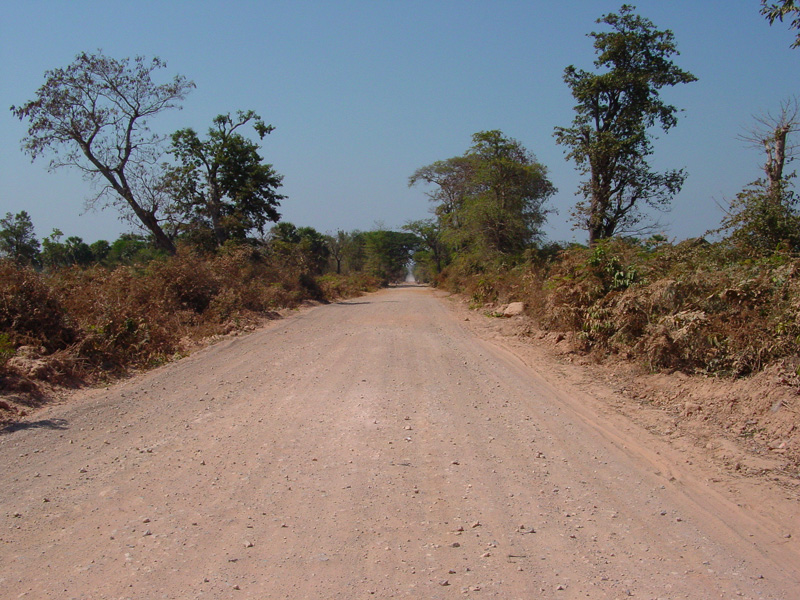
To Build a Road*

(* or: 'An Irishman walks into a bar...')


A Japanese company comes to Cambodia to build a road. They do a professional job, get it done almost on schedule, pick up most of the tab, employ local workers at decent wages, donate maintenance equipment and send an expert back periodically to follow up. While in town, the execs spend freely on karaoke, Johnny Walker Blue and young girls. The road is still in excellent condition more than a decade later.

-----

A Chinese company comes to Cambodia to build a road from the highway to some natural resource. They do a thin but serviceable job, get it done relatively quickly, clear cut miles of jungle on either side for the hardwoods, pay off officials, treat local workers like expendable slaves and dump broken equipment and old fuel oil in the river. While in town, the execs spend lots on karaoke, Johnny Walker Black and young girls. When the project is complete, they abandon dozens of Chinese workers in the country. High level government officials praise their fine work and strings-free generosity. The road disintegrates in 2 or 3 years.

-----

An American government-funded contractor comes to Cambodia to rebuild some road they blew up back in the 70s. First they build a massive walled compound for the American workers to live. They fly all new state of the art construction equipment in from America. They begin a series of regular airlifts to bring in all food, water and Budweiser from America. They set up a church group. The US embassy in conjunction with MTV Exit produces a list of approved bars, restaurants and sights that the American workers are allowed to visit. They send in an advance team of security and engineering experts to survey and secure the area.

They announce start up of the project will depend on improvement in Cambodia’s human rights, anti-trafficking efforts and election reform. Cambodia promises. They begin work on the road using a combination of well paid American and local workers. They threaten to stop work and demand improvement in Cambodia’s human rights, anti-trafficking efforts and election reform. Cambodia promises. They continue working.

They stop work while a congressional committee headed by Dana Rohrabacher debates whether Cambodia is living up to its human rights, anti-trafficking efforts and election reform promises. Nobody cares. They resume work. Somebody gets mugged in Phnom Penh. They stop work and evacuate all American workers to Guam. Six months later a security team is sent in. The team deems it safe enough. The American workers return to Cambodia to find all the supplies, machinery and even the newly laid road have disappeared.

They fly in more supplies and equipment from America. They start work again. They finish the road – truly a first rate job, probably the best road in Cambodia. They adorn it with US flag emblazoned plaques and monuments.

They hold a dedication ceremony attended by the US ambassador and the second assistant secretary of the local sangkat. The American contractors leave. A US government official announces that further aid will depend on Cambodia’s record on human rights, anti-trafficking efforts and election reform. Two months later the Cambodians set up toll booths, paint oknha names over the flags and the road is used to haul illegal timber and traffic sex slaves.
-----

A French company comes to Cambodia and doesn’t build a road.

---

A Vietnamese company comes to Cambodia to build a road from the Vietnam border to some nearby Cambodian village. They use mostly Vietnamese labor, do a thin but serviceable job, and get it done on time. While in town, the execs spend a modest amount on karaoke, Johnny Walker Red and young girls. The project complete, all the Vietnamese workers stay in Cambodia and eventually send for their families to join them.

-----

A Russian company comes to Cambodia to build a road to a Russian financed pleasure palace development. On paper it costs 20 times more than any other road in Cambodia. They begin work. Work stops when the entire executive crew dies of alcohol poisoning. A year later a new group of executives arrives and work resumes. Work stops when two are arrested, one is shot, several disappear and the rest die of alcohol poisoning again. Two years later a new group of executives arrives and work resumes. Ultimately they build a good, serviceable road, using local labor at local wages. The pleasure palace is never completed, but (on paper) remains fully booked, year-round, at rack rates.

-----

A Thai company owned by a consortium of Thai generals comes to Cambodia to build a road. And in fact they build dozens of roads from the border deep into the jungle, and don’t tell anybody about it.

-----

A Malaysian furniture company comes to Cambodia to build a US$1,000,000 road if they can also build an entertainment complex. They build half an entertainment complex and put out the word that they are looking for investors.

One year later construction on the road has not yet begun and the Cambodian government asks what’s going on. The Malaysians announce they are holding an Investors Gala Celebration with free flow of Angkor Beer. Tickets $35/pax. At the Gala they announce their intentions to build a US$10,000,000 road. They build half a hotel attached to the half-built entertainment complex.

Two years later construction on the road has not yet begun and the Cambodian government asks what’s going on. The Malaysians announce they are holding a 5-star Grand Investors Gala Celebration with live Filipino band and free flow of Angkor Beer. Tickets $65/pax. At the Gala they announce their intentions to build a US$100,000,000 road. A Chinese restaurant is added to the half-hotel.

Four years later construction on the road has not yet begun and the Cambodian government asks what’s going on. The Malaysians announce they are holding a Supreme 6-Star Investors Super Gala Celebration with live Filipino band, a grand drawing and free flow of Tiger Beer. Tickets $85/pax++. At the Gala they announce their intentions to build a US$1,000,000,000 road.

Two years later construction on the road has not yet begun and the Cambodian government asks what’s going on. The Malaysians say “Road?”

-----

A Cambodian import-export company sets up to build a road using aid money donated by the EU. They retrieve the old Chinese equipment from the river, refurbish it using solder and bailing wire and filter the fuel oil from the water. They use the aid money to buy luxury cars and karaoke, Johnny Walker Blue and young girls. They gas up the old Chinese equipment with the recovered fuel oil and use it to flatten the ground into a basic but serviceable hardpack road. They call it “done.” The hardpack disintegrates the following rainy season. The Cambodians ask the EU for more aid to help rebuild the road. The EU sends money. A Cambodian import-export company sets to rebuild the road using the aid money. They retrieve the old Chinese equipment…

-----

(All companies and projects appearing in this work are fictitious. Any resemblance to real companies or projects, living or dead, is purely coincidental.)

Originally published on Khmer440.com

Wednesday, October 31, 2012

Mourners, Monks and Nuns

Today was Day 17 since the death of King Father Sihanouk. It would have been his 91st birthday (as Cambodians count birthdays,) his 90th as westerners count. In the late afternoon thousand of monks, nuns and mourners arrived for a mass ceremony in front of the Palace...


Links:
VOA: Authorities Consider Public Palace Viewing of ‘King Father’

Tuesday, October 30, 2012

Death of Sihanouk: Day 16


Brief update, notes.

Mourning continues at the front of the Royal Palace. There are never less than dozens of mourners present, usually hundreds, particularly in the evenings. Last weekend there were thousands all day. More people seem to be arriving in large groups now, often trucked or bussed in from the countryside. As before, people sit in groups in the road opposite the King Father's portrait to mourn and pray, they make flower offerings at the front of the Palace and incense offerings at the urns on the park sidewalk, some sign the visitor books and take photos of themselves in front of the Palace. A large LED screen showing scenes of the funerary proceedings and a placard with an image of the King Father's coffin have recently been affixed to the face of the Place Pavilion.

There are fewer journalists this week and more tourists and beggars about. Security and crowd control is a little tighter and more organized. Away from the mourners the atmosphere feels a bit more mercenary now. Street kids are working the candle tables. There has been a noticeable increase in vendors, most selling lotus flowers, incense, portrait pins, Sihanouk photos and snacks. At least a dozen child vendors are hawking portrait pins in front of the Palace, some in the same pestering manner they work the tourist districts, for example, putting their wares in front of your camera when you are trying to take a photo (see above.)

Several streets around the Palace were closed again today, snarling traffic once again.

Tomorrow, October 31, would be the King Father's 91st (90th) Birthday.

Links:
Phnom Penh Post: A cremation fit for a King
Phnom Penh Post: Statue of Sihanouk set for Dragon Park

'Norodom Sihanouk - A Rock Star King' by Kevin Barrington
(An inspired response to the Gourevitch piece in The New Yorker - 'The Fantasy of King Sihanouk')

'Bill Moyers, Prince Sihanouk (and Me)' by Michael Winship

Cambodian Reflections: Local Specifics and Global Concerns by Brian Stoddart

Royal Palace Pavilion, 3:30PM, October 30, 2012

Sunday, October 28, 2012

Sihanouk Photos

Photo vendor at the Royal Palace

To date, photos of Sihanouk have been one of the few available mementos of King Father Sihanouk's passing. (Portrait pins and commemorative t-shirts are also available.) I noticed the first vendors selling Sihanouk photos in front of the Palace on the evening of Day 3, the day of Sihanouk's return, offering a selection of just 3 or 4 different photos. Both the number of vendors and variety of photos have increased steadily since. As of this afternoon there were at least a couple of dozen photo vendors in front of the Palace and as many different photos. After the portrait shots, the family photos seem the most popular. I was quoted prices of 1000-2000 riel (US$0.25 - US$0.50) per photo, though 1000 riel seems to be the 'right price.' The follow is a selection of the memento photos that I bought from vendors at the Palace over the last few days.    


One of the most popular selling photos. Monineath, Sihamoni, Sihanouk (c.1970?)

Also a popular selling photo. Prince Ranariddh, Queen Mother Monineath, King Father Sihanouk, King Sihamoni, Princess Bopha Devi

Monineath, Sihanouk

King Sihanouk

King Norodom Sihanouk, Queen Norodom Monineath. Royal Ploughing Day, 1969.


King Father Sihanouk, King Sihamoni, Queen Mother Monineath. Coronation of Sihamoni, 2004.

King Norodom Sihanouk

King Norodom Sihanouk

Prime Minister Norodom Sihanouk

Queen Monineath, King Sihanouk


King Sihanouk


King Sihanouk


King Sihanouk

Sihanouk in Moon, October 21, 2012

Sihanouk in Moon over Palace, October 21, 2012

Sihanouk in Moon, October 21, 2012